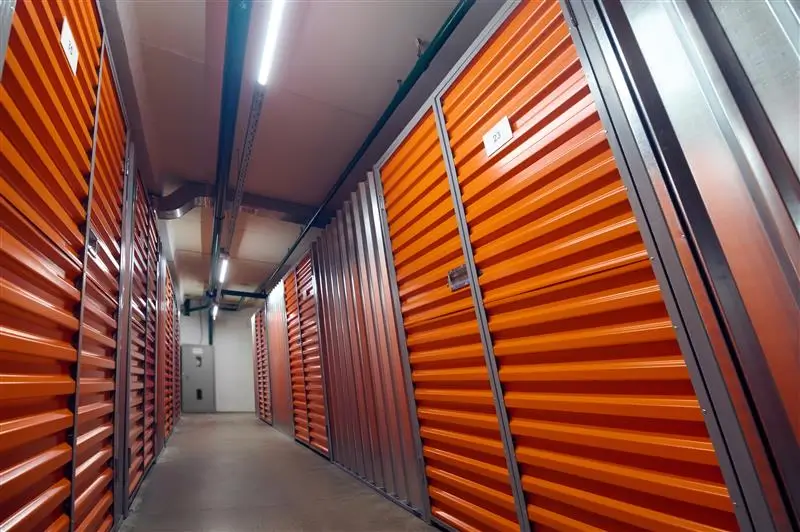

Self-Storage for Businesses
When you’ve outgrown the spare bedroom but aren’t ready for a warehouse lease.
Who this guide is for
You’re running a business. You have inventory, equipment, documents, or seasonal stock that you need somewhere to put. You’ve considered:
- Warehouse lease — too expensive for your current size, locks you into 3-5 years
- Spare bedroom / garage / basement — works until it doesn’t (HOA, family, scale)
- Self-storage — possibly perfect, but you’re not sure if it’s allowed or how to make it work
This guide answers all of that. We cover the four most common business use cases for storage, the legal and insurance considerations, the operational tactics that make storage actually useful for a business (not just a place stuff goes to die), and how to scale from a 10×10 unit to a 10×30 + drive-up access as you grow.
If your business uses storage, you should read all of this. If you’re just researching, jump to the use case below that matches you.
Quick navigation:
– E-commerce inventory storage (Amazon FBA, Shopify, Etsy, etc.)
– Contractor & trades equipment storage
– Business document / records storage
– Seasonal inventory storage (retail, holiday)
– The four operational rules that make business storage work
– Legal, insurance, and tax considerations
– Frequently asked questions
E-commerce / fulfillment storage
If you’re selling on Amazon, Shopify, Etsy, eBay, or your own site at a volume that’s between “fits in the spare bedroom” and “needs a warehouse,” self-storage is almost certainly your right answer for the next 12-24 months.
Typical e-commerce scale at each storage unit size
| Monthly orders | Recommended unit | Why |
|---|---|---|
| 50-500 orders | 5×10 or 10×10 | Inventory turnover is fast enough that you don’t need huge capacity |
| 500-2,500 orders | 10×10 or 10×15 | Need shelving for SKU organization, packing station |
| 2,500-5,000 orders | 10×15 or 10×20 | Adding shipping supplies storage, returns processing area |
| 5,000+ orders | 10×20 to 10×30, often multiple units | Approaching the size where a warehouse becomes the right move |
What e-commerce sellers actually do in a storage unit
The mistake: treating storage as just “where the boxes live.”
The optimization: treating storage as a mini-fulfillment center with:
- Shelving along the walls (industrial wire shelving, ~$80-150 per unit, IKEA or Costco)
- A folding work table in the center for packing
- A printer + label maker plugged into the wall outlet (most Forward Storage units have one)
- Pre-cut packing materials (boxes pre-folded flat, bubble wrap pre-cut to size)
- A scale for shipping cost calculation
- Tape, scissors, markers, label sheets — the small things that slow you down if not at hand
A well-organized 10×10 storage unit can ship 200-300 orders per day for one person with no overflow into your home.
Amazon FBA reserve / off-FBA storage
For Amazon FBA sellers, self-storage is critical for two specific use cases:
- Reserve inventory that you draw from to replenish FBA — particularly important during inventory shortages, IPI-score management, or when you’re between shipments to FBA warehouses
- Off-FBA fulfillment for direct-to-consumer orders that bypass Amazon (your own site, returns, special orders)
Many FBA sellers use a 10×10 or 10×15 unit as a “buffer warehouse” that supplements FBA without committing to a real warehouse lease.
Returns processing
Returns are the silent killer of small e-commerce margin. A storage unit gives you the physical space to:
– Inspect returned items
– Photograph damage
– Repackage saleable items
– Stage write-offs for tax purposes
Without dedicated space, returns either pile up in your garage (lost in the chaos) or get processed on your kitchen table (driving your spouse crazy).
Contractor & trades equipment storage
If you’re a contractor — general, electrical, plumbing, HVAC, landscaping, painting, drywall, roofing, you name it — self-storage often beats a shop lease until you have 3+ trucks or full-time office staff.
Why contractors use storage
- Job-specific staging — store materials for an upcoming remodel without cluttering your driveway
- Tool storage — overflow tools and equipment that don’t fit in the truck or trailer
- Materials warehousing — pallet of tile, stack of drywall, bundle of trim — bought at volume pricing, used over weeks
- Equipment between jobs — equipment that’s currently between jobsites (lifts, scaffolding, sanders)
- Off-season storage — landscaping equipment in winter, snow removal in summer
Drive-up vs interior units for contractors
For most contractors, drive-up access is non-negotiable. The 5 minutes of carrying heavy gear from a parking lot through a hallway every time you load/unload adds up to hours per week.
Forward Storage locations with the most drive-up contractor-friendly availability:
– Magnolia TX — large outdoor lot + drive-up units
– Buford GA — drive-up + outdoor vehicle storage
– Waterloo IA — drive-up units, room for trailers
– Memphis TN — drive-up + interior options
Material storage considerations
Some materials need climate control to maintain quality:
– Paint — temperature swings degrade emulsion; latex paint freezes
– Drywall mud — can freeze and separate
– Caulks and adhesives — manufacturer specs usually say 40-100°F storage
– Hardwood flooring — needs to acclimate; humidity matters
– Electronics / smart-home gear — sensitive to temp + humidity
For these: climate-controlled units (typically 55-80°F, sub-60% humidity). The Forward Storage climate-controlled guide covers the details.
For lumber, concrete bags, basic tools, ladders, scaffolding, plumbing fittings, ductwork — standard non-climate-controlled storage works fine.
Liability and insurance for contractor storage
Two things every contractor should know:
-
Storage facility insurance doesn’t cover your equipment. Your business insurance (general liability + inland marine / tools coverage) needs to cover stored items. Forward Storage carries facility-level insurance for the building, not your contents.
-
Workers’ compensation may not cover injuries at storage units depending on your state and policy. If an employee loads/unloads at storage during work, check that comp coverage extends. In most states it does; double-check.
Business document / records storage
For service businesses (law, accounting, medical practice, real estate, financial planning), records retention is a regulatory matter, not a preference. Storage units are an efficient way to handle the records you must keep but don’t need to access daily.
What counts as records storage
- Closed client files (closed in last 7-10 years, retention period varies by industry)
- Tax records (IRS requires 7 years; some states longer)
- Personnel files (varies; typically 7-10 years after termination)
- Legal/audit/litigation files (often indefinite)
- Real estate documents (closed deals, leases, title records)
- Medical records (HIPAA — 6-10 years depending on state and practice type)
The right unit for document storage
A 5×10 unit holds about 100 banker’s boxes (12×10×15 inches each). That’s roughly 5-10 years of records for a single-attorney practice or a small accounting firm.
For larger practices, a 10×10 (200 boxes) or 10×15 (300+ boxes) is typical.
Climate control is mandatory for document storage
Paper degrades with humidity. Important documents — especially original signed instruments — should ALWAYS be in climate-controlled storage. Forward Storage offers climate-controlled units at most locations.
Organization protocols for document storage
The mistake: throwing everything into the unit and hoping for the best.
The best practice:
- Inventory each box before it goes in (a one-page printout listing what’s in the box, with file names/numbers)
- Label each box with: date of contents, retention review date, internal box number
- Maintain a master index (spreadsheet or document management system) listing all boxes and where they’re stored
- Set calendar reminders for retention review dates — destroy what you no longer need to keep
A 30-minute organization session up front saves weeks of “where is that file” pain later.
HIPAA, FTC, attorney-client privilege considerations
If you’re storing protected information (medical, financial, attorney files):
- Limit access — keep the storage unit on YOUR access list only, not shared with staff who shouldn’t see protected info
- Document destruction — when retention period ends, properly destroy (shred, not just trash)
- Document the chain of custody — when records move into/out of storage, log it
- Get a signed acknowledgment from Forward Storage (or your storage provider) that they understand the sensitive nature
For most practices, a self-storage unit is fully compliant with industry regulations as long as the unit is yours alone and you control access.
Seasonal inventory storage
If you sell anything with seasonality — Christmas trees, Halloween costumes, pool floats, snow shovels, school supplies, lawn equipment — storage smooths the inventory ramp.
The seasonal storage math
Without storage: You’re either chronically over-stocked off-season (cash tied up in unsold goods, warehouse occupied) or chronically under-stocked in-season (missed sales because you couldn’t get inventory positioned in time).
With storage: You buy in volume during the off-season at favorable pricing, store the inventory, draw it down as in-season sales accelerate. Your cash and your selling capacity both improve.
Use cases by industry
| Industry | Seasonal storage need |
|---|---|
| Retail | Holiday décor, summer-only products, back-to-school, Halloween costumes |
| Landscaping | Snow removal equipment in summer, mowers in winter |
| Pool & spa | Floats, chemicals, off-season equipment storage |
| Construction | Materials bought ahead of price increases |
| Event/wedding | Linens, props, supplies between event seasons |
| Catering | Banquet equipment, seasonal serving pieces |
Pro tip: rotation labeling
If you have inventory you’ll need to draw down month by month (say, holiday items October-December), label boxes with the DATE you’ll need to pull them, not just what’s inside. Sort the unit by date — earliest at the front, latest at the back. Saves you from unloading 30 boxes to find the November stock buried behind the December.
The four operational rules that make business storage work
After serving 1,000+ business storage customers across 26 locations, four patterns consistently separate the businesses that get value from storage from the ones who eventually move out frustrated.
Rule 1: Treat your storage unit like a real warehouse
Most businesses pile stuff in and hope to find it later. The ones who get the most value:
– Lay out shelving immediately (don’t wait — it doesn’t get easier as the unit fills up)
– Establish a labeling/inventory system from day one
– Visit the unit on a regular schedule (weekly minimum) to keep it organized
A neglected storage unit becomes a productivity drag. An organized one becomes a workflow advantage.
Rule 2: Pick a unit close enough that you’ll actually use it
A storage unit 30 minutes away will quietly fall out of your operational rhythm. You’ll start avoiding trips. Inventory gets stale. Productivity suffers.
Forward Storage operates 26 locations across 13 states — pick the closest one to your home base, even if it’s not the cheapest. The convenience compounds over months and years.
Rule 3: Build the routine: visit weekly, organize monthly, audit quarterly
- Weekly: Pull what you need, replenish what you sold, restock supplies
- Monthly: Re-shelve anything out of place, take a quick photo of the unit’s state
- Quarterly: Walk through your inventory against your records, write off damaged/obsolete items, look for items to consolidate or discard
The businesses that follow this routine almost never have the “lost inventory” or “forgot what I had” problems that plague others.
Rule 4: Plan your exit before you start
Eventually you’ll outgrow storage (or scale back into a smaller setup). Know your “graduation triggers”:
- Outgrowing UP: When you’re regularly using 3+ storage units, you’re paying enough that a 1,500-3,000 sqft small warehouse becomes competitive — usually around the $1,500-2,500/month storage spend mark
- Scaling DOWN: When the business slows, drop units before they become dead weight
Don’t let storage become “the place stuff goes to die.” Run it as an active part of operations.
Legal, insurance, and tax considerations
Is operating a business out of a storage unit legal?
Storing inventory and equipment: yes, at virtually every storage facility, including Forward Storage. This is what self-storage is designed for.
Running customer-facing operations (storefront, retail, customer visits) from a storage unit: usually no. Storage facility leases prohibit retail operations, customer foot traffic for sales, and using the unit as a “place of business.” Check your facility’s specific rules.
Performing work inside the unit (assembly, repair, fabrication): usually allowed for light work (packing orders, light assembly) with restrictions (no power tools beyond hand tools, no commercial-grade machinery, no flammables, no excessive noise).
Insurance for business inventory in storage
Facility insurance covers the building, not your contents. You need either:
- Business inventory rider on your existing business insurance (most BOPs include some off-premises coverage; check the dollar limit)
- Standalone storage insurance (typically offered at storage facility check-in — convenient but often expensive per dollar of coverage)
- A separate inland marine / equipment floater policy (best for high-value contractor equipment)
For most small businesses storing $10,000-50,000 in inventory: a $20-40/month rider on your business policy is the right answer. Talk to your business insurance agent before storing.
Tax considerations
Self-storage costs for business use are fully deductible as a business expense on Schedule C (sole proprietor), Form 1120 (corporation), or your state equivalent.
Keep records of:
– Monthly storage receipts
– Photos / inventory of what’s stored (to document business use if audited)
– Mileage to/from the storage unit (if you track vehicle expenses by mileage method)
If you’re using a storage unit for a mix of personal and business stuff: only the business-use portion is deductible. Better practice: separate units for personal and business if both are at scale.
Frequently asked questions
Can I have packages delivered directly to my storage unit?
Forward Storage facilities can accept signed-for deliveries (FedEx, UPS, USPS, freight) on your behalf at most locations, but it requires arranging in advance with the property manager. Many businesses use a hybrid: smaller packages to their home/office, palletized shipments to storage.
Can I run a Shopify / Etsy / Amazon business out of a Forward Storage unit?
The storage portion (holding inventory, picking orders, packing, shipping prep): yes, fully supported. Forward Storage units have power outlets and Wi-Fi access at most locations.
The retail portion (customers visiting in person): not allowed under any storage facility’s lease. Your customers buy online; you fulfill from storage; no in-person contact.
Can my employees access the storage unit?
Yes — you can authorize additional access codes / keys for employees. Most storage facilities require the primary account holder to add authorized users at the property in person. Forward Storage’s process varies slightly by location; call the facility for details.
What if I outgrow my unit mid-month?
You can upsize (or add a second unit) at any time, subject to availability. Forward Storage doesn’t charge transfer fees between units at the same property — only the prorated difference in monthly rent.
How does climate control work for inventory storage?
Climate-controlled units maintain 55-80°F and sub-60% humidity year-round. This protects: electronics, leather goods, paper products (books, paper inventory, documents), wood items, anything sensitive to temperature or moisture. Adds approximately 20-30% to the base unit price. Worth it for most business inventory.
Can I write off the storage cost on my taxes?
Yes — business use of storage is a fully deductible operating expense. Keep monthly receipts and a record of what’s stored (in case of audit).
Is there a minimum lease term?
Forward Storage is month-to-month at every location. No annual contracts, no early-termination fees. You can scale up, scale down, or move out with a month’s notice.
Ready to find storage for your business?
Browse all Forward Storage locations →
If you want to discuss your specific business needs first, call 888-684-4933. We’ve helped contractors, e-commerce sellers, professional services, retail, and manufacturing businesses size their storage correctly — happy to walk through what you need.
Further reading
- Complete Self-Storage Size Guide — pick the right unit size on the first try
- Climate-Controlled Storage Guide — when your inventory needs it
- Vehicle Storage Guide — for businesses with trucks, trailers, equipment
This guide is maintained by the Forward Storage team. Last updated: 2026-05-20.