
Climate-Controlled Storage: When You Need It (and When You Don’t)
A practical guide to deciding whether the extra $15-50/month is worth it for what you’re storing.
The two-minute answer
Get climate-controlled storage if you’re storing:
- Wood furniture, leather, electronics, musical instruments, artwork, photographs, books, important documents, vintage clothes, antiques, or anything specifically worth more than $1,000
Skip it (standard non-climate storage is fine) if you’re storing:
- Sports equipment, garden tools, plastic-stored holiday decor, vehicles, outdoor furniture, building materials (most), basic camping/outdoor gear, kitchenware
Decide based on duration:
- Storing <3 months in mild weather → standard works for almost everything
- Storing 3-12 months → climate-control anything in the “consider” tier
- Storing 12+ months → climate-control anything sensitive, no exceptions
If you can stop here, you have your answer. Want the full reasoning? Read on.
What climate-controlled storage actually means
Storage facilities use the term “climate-controlled” loosely. Here’s what it should mean — and what to verify before you rent.
The two variables that matter
Temperature. Most climate-controlled units maintain a range of 55-80°F year-round. Forward Storage’s climate-controlled units run roughly that range — never below 50°F in winter, never above 85°F in peak summer.
Humidity. This is the underrated variable. Climate-controlled units should maintain humidity below 60% (ideally 35-55%). Most humidity damage to stored items happens above 65% relative humidity for extended periods.
If a facility says “climate-controlled” but only mentions temperature, ask about humidity. A unit that’s temperature-controlled but humidity-uncontrolled isn’t really climate-controlled for the purposes of protecting your stuff.
What climate control is NOT
- It’s not “air conditioning.” Air conditioning cools but doesn’t necessarily manage humidity. A climate-controlled unit cools AND dehumidifies.
- It’s not “indoor storage.” An indoor unit without active climate management still tracks outdoor temp/humidity, just with a smaller swing.
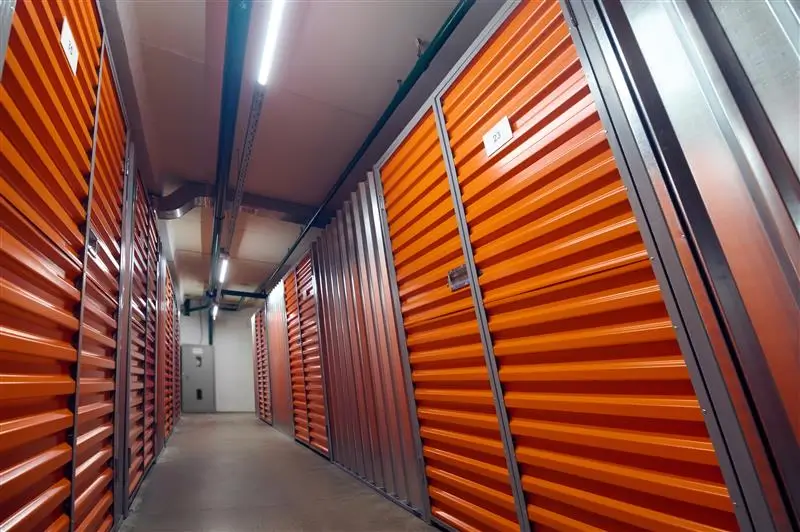
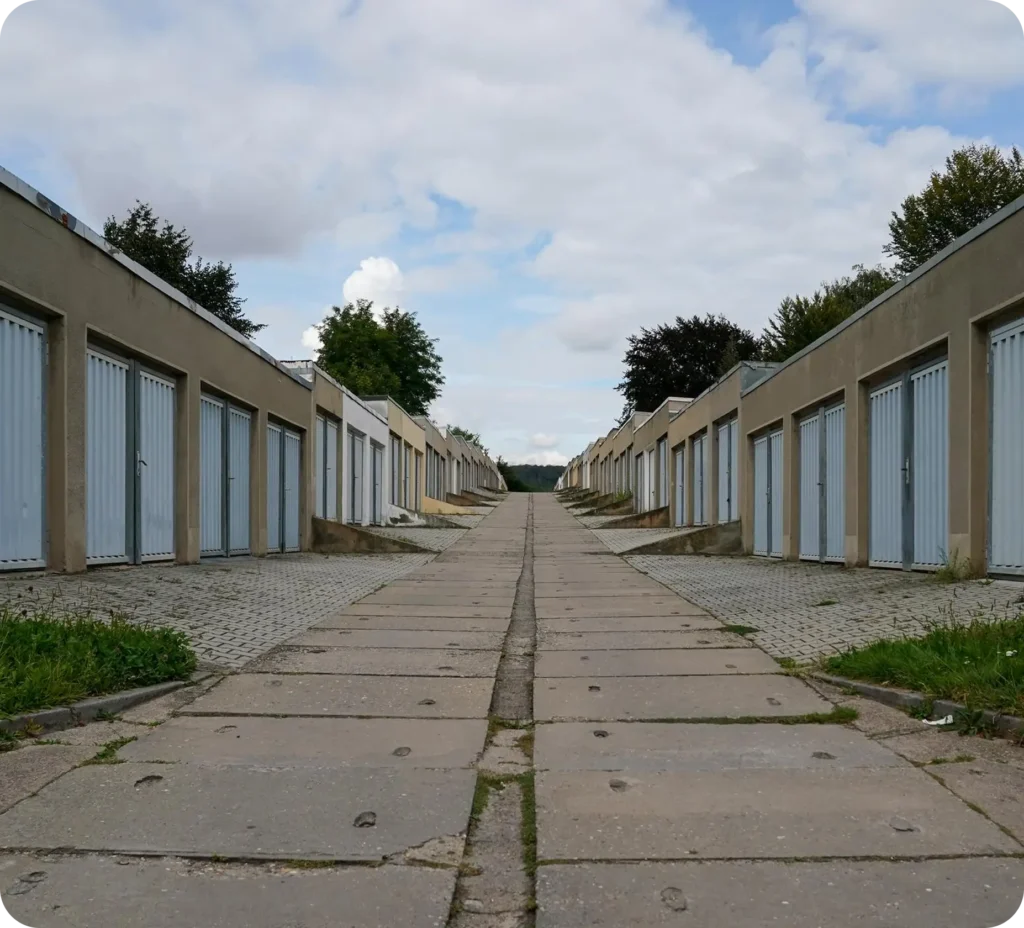
- It’s not “drive-up.” Almost all climate-controlled units are inside a building (interior access via hallway). Drive-up units, by their nature, can’t be climate-sealed.
How Forward Storage’s climate-controlled units work
At our 26 locations, climate-controlled units are housed in fully enclosed buildings with:
– HVAC systems sized to maintain 55-80°F year-round
– Dehumidifier units managing humidity below 60%
– Interior hallway access (no exterior doors per unit)
– Insulated walls between units (so neighbors’ temperature swings don’t bleed in)
– Power backup at locations in high-storm-risk areas (Gulfport, Beaufort, Port Royal)
What needs climate control — the item-by-item guide
Wood furniture: YES, climate control
Wood expands and contracts with humidity changes. Repeated cycles of expansion and contraction cause:
– Warped boards
– Cracked joints
– Loose veneer
– Split panels (especially solid wood)
Particle board and MDF furniture is somewhat more forgiving than solid wood — but only somewhat. After 6+ months in uncontrolled humidity, MDF starts to swell and weaken.
Edge case: If you’re only storing for 30-60 days in moderate weather, wood furniture can survive standard storage. Long-term: climate control.
Leather goods: YES, climate control
Leather is animal hide. It reacts to humidity by mildewing (high humidity) and cracking (low humidity). Leather jackets, couches, briefcases, shoes, saddles — all need climate control beyond 60-90 days of storage.
You’ll especially want climate control if you’re in:
– Coastal humid climates (Gulfport, Beaufort, Port Royal, anywhere in the Southeast in summer)
– Arid climates (West Texas) where leather can dry-crack
– Areas with large daily temperature swings (mountainous regions)
Electronics: YES, climate control
Capacitors in electronics degrade faster at high temperatures. Hard drives can fail if subjected to temperature extremes. Modern TVs, laptops, audio equipment, cameras, gaming consoles — all should be climate-controlled if storing more than 30 days.
Worst-case scenario: A laptop in a 110°F storage unit for a summer can have its battery permanently degraded or its hard drive damaged before you ever take it out.
Musical instruments: YES, climate control
Wood-bodied instruments (guitars, violins, pianos, drum shells) are extremely humidity-sensitive. Strings can rust, wood can crack, glue joints can weaken.
For high-value instruments ($1,000+): climate control plus a hygrometer + dehumidifier system inside the case. If you have a vintage guitar in storage, this matters a lot.
Artwork, photographs, books, documents: YES, climate control
Paper and canvas are organic materials that absorb and release moisture. Repeated cycles cause:
– Foxing (brown spots on paper)
– Mold growth
– Yellowing
– Ink bleed
– Adhesive failure
For anything irreplaceable (family photos, legal documents, art) — climate control is non-negotiable.
Vintage clothes, fabrics, linens: YES, climate control
Natural fibers (cotton, wool, silk, linen) attract moths, mildew with humidity, and degrade with UV exposure. Climate-controlled storage solves the humidity and (usually) UV issues. Add cedar blocks or mothballs for moth prevention.
Antiques (anything pre-1950): YES, climate control
Old materials are usually fragile. Antique furniture, lamps, dishware, books, fabrics — all benefit from climate control. The investment in climate control is usually a tiny fraction of the value of the antique.
Vinyl records, film, photo negatives: YES, climate control
These are especially heat-sensitive. Vinyl warps at sustained 90°F+. Film and negatives degrade chemically with heat and humidity. Climate control is mandatory for collections.
Wine: YES, with caveats
Wine storage has specific requirements: 55-65°F (cooler than typical climate-controlled storage), 50-70% humidity, dark (no UV), still (no vibration). Most climate-controlled storage runs warmer than ideal for long-term wine storage. For serious wine collections, look for wine-specialized storage; for casual storage of a few cases, climate-controlled is fine.
What does NOT need climate control
Storing these items in standard (non-climate-controlled) units is fine, even long-term:
Sports equipment: NO
Bikes, skis, snowboards, golf clubs, kayaks, surfboards, tents, sleeping bags — all built to be outdoors. Standard storage works fine.
Exception: Some carbon-fiber sports equipment (high-end bike frames, hockey sticks) can degrade with prolonged heat. If you’re storing a $5,000 carbon bike for years: climate control. Otherwise: don’t bother.
Garden and yard equipment: NO
Lawnmowers, weed-eaters, leaf blowers, shovels, hoses, garden tools, planters — all built for outdoor use. Standard storage is more than adequate.
Exception: Lithium batteries (for electric mowers, leaf blowers) prefer 50-77°F for long-term storage. Bring them inside or use climate-controlled.
Plastic-stored holiday decorations: NO
If your holiday decor (Christmas lights, ornaments, wreaths) is in sealed plastic bins, standard storage works fine. The bins protect against humidity.
Exception: Wooden or ceramic ornaments inside the bins might benefit from climate control if very valuable.
Vehicles: NO (with edge cases)
Cars, motorcycles, RVs, boats — designed for outdoor use. Standard or outdoor storage is normal.
Exceptions: Classic cars (especially convertibles, anything pre-1970), expensive motorcycles (Ducati, Vincent), high-end boats with sensitive electronics — climate control extends life.
Outdoor furniture: NO
Patio sets, deck boxes, grills, outdoor cushions — all designed for outdoor use. Standard storage works.
Most building materials: NO
Lumber, drywall, concrete, brick, tile, roofing — all standard storage. Exceptions: Paint, caulks, adhesives, finished wood flooring, hardwood molding — these need climate control.
Kitchenware, dishware, basic cookware: NO
Pots, pans, dishes, glassware — all standard storage. Wrap fragile items carefully but they don’t need climate control.
Basic clothing in plastic bins: NO
Modern casual clothing (cotton t-shirts, jeans, athletic wear) in sealed plastic bins stores fine in standard units. Add cedar/mothballs for moth prevention.
The cost-benefit math
Climate control typically adds 20-30% to the unit’s monthly price. So a 10×10 unit that’s $100/month without climate control becomes $125-130/month with it.
When the math favors climate control
If you’re storing items worth >$2,000 that would be damaged by humidity/temperature swings:
- Standard storage saves: ~$25/month = $300/year
- Damage risk: 5-30% probability over 12 months of significant damage
- Expected loss: $100-600/year
Climate control pays for itself with one prevented damage event.
When the math favors standard storage
If you’re storing items worth <$1,000 OR items not sensitive to climate (sports gear, vehicles, etc.):
- Climate control costs extra: $300/year
- Damage risk to stored items: ~0% (they’re climate-insensitive)
- Net loss to climate-controlling: $300/year of pure overhead
For non-sensitive items, standard storage is genuinely the right answer.
The gray zone: $1,000-2,000 of moderately-sensitive items
If you’re storing $1,500 of furniture for 6 months, the math is closer:
- Climate control adds: ~$150 over 6 months
- Damage risk over 6 months: ~5-15%
- Expected loss: $75-225
Roughly breakeven. Use other criteria (your local climate, building’s actual swings, the specific items’ tolerance) to decide.
Forward Storage climate-controlled availability
Most Forward Storage locations offer climate-controlled units, but availability varies:
| Location | Climate-controlled availability |
|---|---|
| Buford GA | Yes — multiple sizes |
| Eden GA | Yes |
| LaGrange GA | Yes |
| Warner Robins 1455 GA | Yes |
| Waterloo IA | Yes |
| Paris KY | Yes — limited |
| Middleville MI | Yes |
| Gulfport MS | Yes — high demand in coastal humid climate |
| New Bern (all 5 NC locations) | Yes at most |
| North Chili NY | Yes |
| Wilkesboro NC | Yes |
| Landis NC | Yes — limited |
| Hamlin PA | Yes — limited |
| Beaufort SC | Yes — high demand in coastal humid climate |
| Port Royal SC | Yes |
| Memphis TN | Yes |
| Hereford TX | Limited |
| Magnolia TX | Yes |
| San Antonio HWY 87 | Yes |
| San Antonio HWY 181 | Yes |
| Fredericksburg VA | Yes |
| Salem VA | Yes |
| Pine Bluff AR | Yes |
For exact availability and current pricing at your nearest location, check the individual property page or call 888-684-4933.
Climate-control myths
Myth 1: “Indoor storage is the same as climate-controlled.”
Not quite. An indoor unit is shielded from direct sunlight and rain, but without active HVAC, indoor temps still swing with outdoor temps — just with a smaller magnitude. In a Mississippi summer, an indoor uncontrolled unit can hit 95°F. In a Pennsylvania winter, 35°F. Both are too extreme for sensitive items.
Myth 2: “Climate control is a scam — facilities don’t really maintain the temperature.”
It varies by facility. Forward Storage’s climate-controlled units are monitored and maintained per stated spec. If you’re unsure about a competitor’s climate-controlled offering, ask:
– What’s the temperature range?
– Is humidity controlled? Below what %?
– How often is the HVAC serviced?
– Is there backup power?
A reputable facility will answer all four directly.
Myth 3: “I only need climate control in summer.”
Humidity is high year-round in coastal/southern climates. Wintertime cold can also damage some items (paint freezes, batteries fail, electronics crack). Climate control is year-round protection, not summer-only.
Myth 4: “Climate-controlled units are way more expensive.”
20-30% premium is the standard. On a $100/month unit, that’s $20-30. The expected damage value to sensitive items typically exceeds that within a few months.
How to decide for your specific situation
Three questions:
-
What’s the most-sensitive thing I’m storing?
– If it’s anything from the “Yes” list above: climate control.
– If everything is in the “No” list: standard storage. -
How long am I storing it?
– <30 days in mild weather: standard works for almost everything.
– 3-12 months: climate control anything in the “consider” tier.
– 12+ months: climate control anything sensitive, no exceptions. -
What’s my local climate?
– Coastal humid (Gulfport, SC, GA, coastal VA, coastal NC): climate-control aggressively.
– Hot dry (Texas Panhandle, Arizona analog): climate-control electronics and wood.
– Cold continental (PA, IA, MI, NY): climate-control liquids, electronics, anything that can freeze.
– Mild temperate (most of GA, KY, TN, mid VA): less critical but still recommended for valuables.
Frequently asked questions
Can I switch from standard to climate-controlled later?
Yes, subject to availability. Forward Storage allows unit transfers at any time within a property — only the prorated rent difference applies. Call your facility to arrange.
Is climate control 24/7?
Yes. The HVAC and dehumidifiers run continuously. Brief power interruptions don’t significantly affect interior climate because the building is insulated.
What happens during a power outage?
Forward Storage facilities in storm-prone areas (Gulfport, Beaufort, Port Royal) have backup power for climate control. Other locations rely on grid power. In a multi-day outage, interior climate slowly drifts — but the building’s thermal mass slows the drift considerably. Your items are safer in an unpowered climate-controlled unit than outside it.
Do I need to do anything special when moving items into climate-controlled storage?
- Acclimate items for 24-48 hours before storing if they’ve been somewhere very different (a 100°F outdoor truck going into a 70°F unit causes condensation)
- Don’t store wet/damp items — let them dry fully first
- Use breathable covers (cotton sheets, not plastic) on furniture to prevent moisture buildup
- Open electronics’ protective cases so air can circulate (don’t store laptops in zip-up sleeves long-term)
Can climate-controlled storage prevent mold entirely?
Significantly reduces it, but doesn’t guarantee zero mold. If you’re storing items that already have mold spores or moisture, climate control slows but doesn’t stop the problem. Always store dry, clean items.
Is climate-controlled storage worth it for vehicles?
For most vehicles: no. For classic cars, expensive motorcycles, RVs with sensitive electronics, boats with extensive interior fabric — possibly, if you can find a unit large enough. Most large climate-controlled vehicle storage is at specialty facilities, not general self-storage.
Ready to find climate-controlled storage?
Find your nearest Forward Storage location with climate-controlled availability →
Or call 888-684-4933 to discuss specific items you’re storing — we’ll tell you honestly whether climate control is worth the premium for your situation.
Further reading
- Complete Self-Storage Size Guide — pick the right unit size on the first try
- Self-Storage for Businesses — inventory and equipment storage considerations
- The Moving & Storage Guide — when climate control matters during a move
This guide is maintained by the Forward Storage team. Last updated: 2026-05-20.